
As technology advances and new problems present themselves, electrical engineers who can meet the needs of the modern world are in high demand, and adapting to electrical engineering education has become increasingly important. UC Merced's electrical engineering program, one of the university's newest, focuses on equipping students with the skills to solve complex engineering problems.
The National Science Foundation, through its Revolutionizing Engineering Departments (RED) program, has awarded the department a $1 million grant to adapt proven curriculum redesign approaches developed at other institutions.
This project aims to expand UC Merced's electrical engineering program by introducing new approaches that strengthen the connection between coursework, engineering practice and the communities from which the university's students come.
Most students at UC Merced are in-state, with many from the Central Valley. Course content that focuses on solving real problems in the Central Valley will allow students to see the importance of their work, increasing student engagement. As a result, the program aims to reframe the electrical engineering curriculum for the Central Valley and focus on issues relevant to the region.
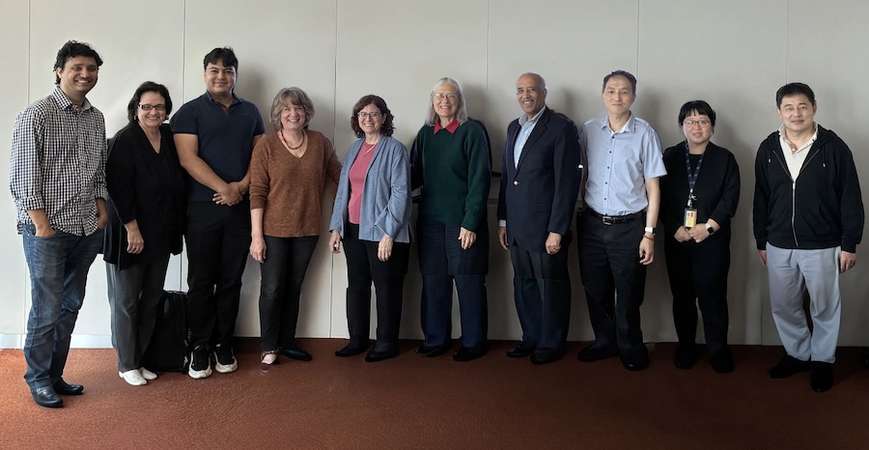
A team of faculty, staff, educational and career experts and previous students will redesign classes that will bring a stronger understanding across these courses. By rethinking how these courses are taught, the program seeks to build a more cohesive and effective learning pathway.
The team will implement "design thinking," a management sciences concept that guides people to engage and work together better and in a structured manner. Electrical engineering faculty will work together along with experts from other areas, such as career specialists, LatinX experts, education researchers and industry professionals in a structured process to redesign courses.
In addition to internal partners, the research team is collaborating with the University of San Diego and Iowa State University, two institutions whose earlier RED projects in the program offer crucial evidence.
"We are hoping to adapt prior successful strategies to revolutionize this culture in our department and then share this process with other departments and institutions," said Professor Ayush Pandey. "We anticipate that electrical engineering faculty will work as a stronger collective group toward the department's pedagogical efforts, and students who graduate from our program will have stronger professional preparation and a better sense of what real-world engineering is like in the field."